Kevin Hayward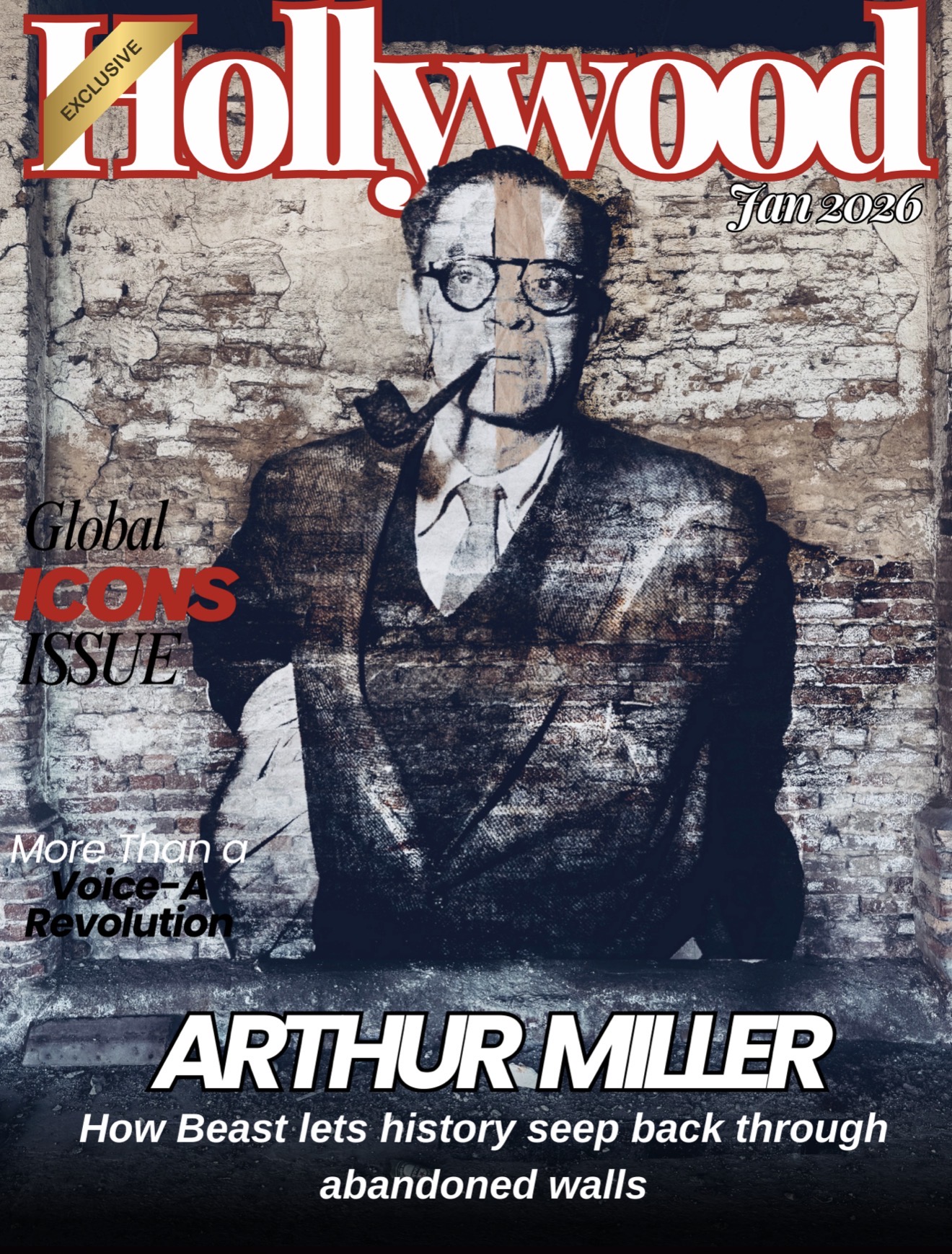
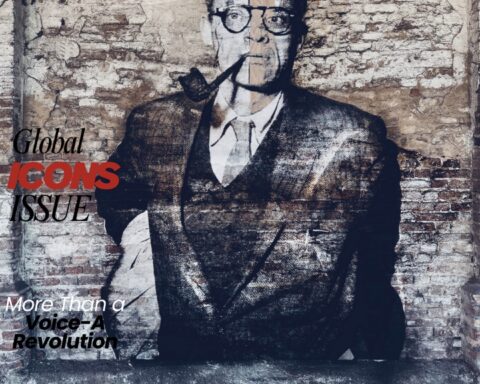
If you walk through an abandoned historical center, chances are you’re not expecting to meet Philip Roth, Simone de Beauvoir, or Carl Gustav Jung staring back at you from a crumbling wall. And yet, that’s exactly what Beast wants to happen. For more than fifteen years, the Italian street artist has been quietly placing images where they’re not supposed to be. Not in galleries, not in museums, not framed behind glass. But on walls that time has already started to erase. Walls that are cracked, damp, peeling. Walls most people don’t even notice anymore. Beast has always worked with public space, but his latest series, “…and we hired a bloke to fix the wall”, takes that relationship to another level. This is not street art as decoration, and it’s definitely not street art as branding. It’s closer to an ambush. A soft one, maybe, but still an ambush.
From political mash-ups to memory work
Beast started back in 2009, producing political and social mash-ups framed in gold and pasted directly onto the street. Early works were sharp, ironic, openly satirical. Politicians, public figures, power structures—everything was fair game. The street was treated like a chaotic, open-air gallery, where art didn’t ask for permission and didn’t wait to be understood. Over the years, the scale changed. The tone shifted. Beast moved from small framed interventions to massive paste-ups and giant murals, often replacing advertising posters with his own images or occupying the facades of abandoned buildings in the countryside. The work became physically bigger, but conceptually quieter. Not softer. Quieter. Instead of reacting to the daily noise of politics, Beast started digging into something slower and heavier: time, memory, and what we choose to forget.
The wall comes first
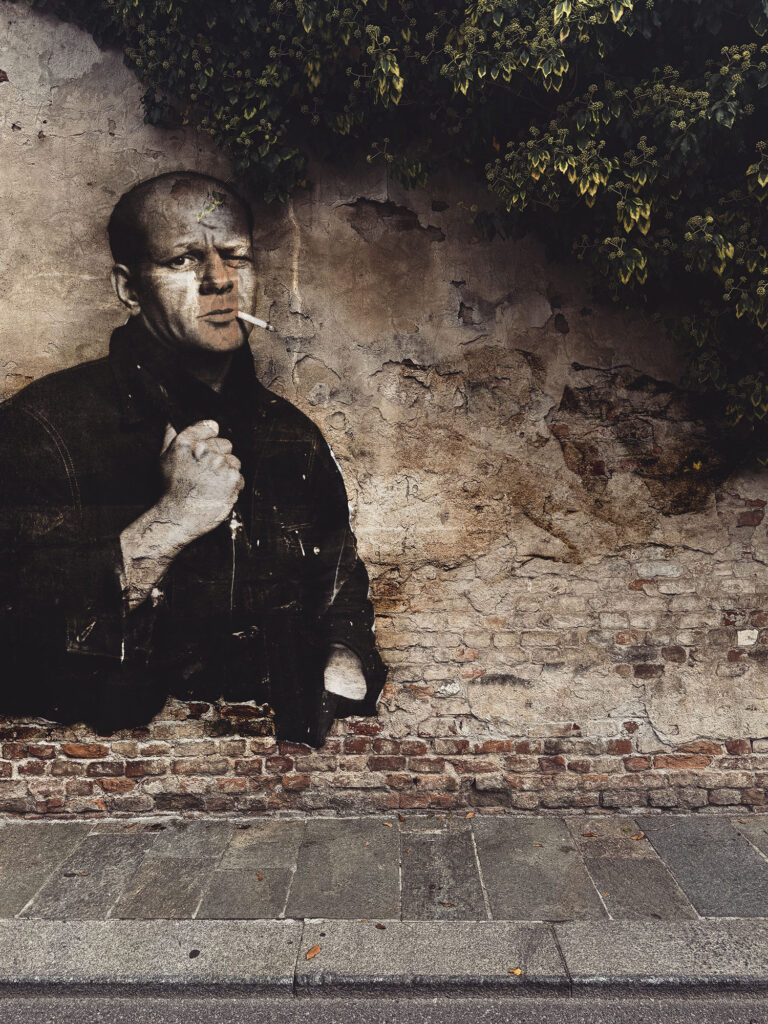
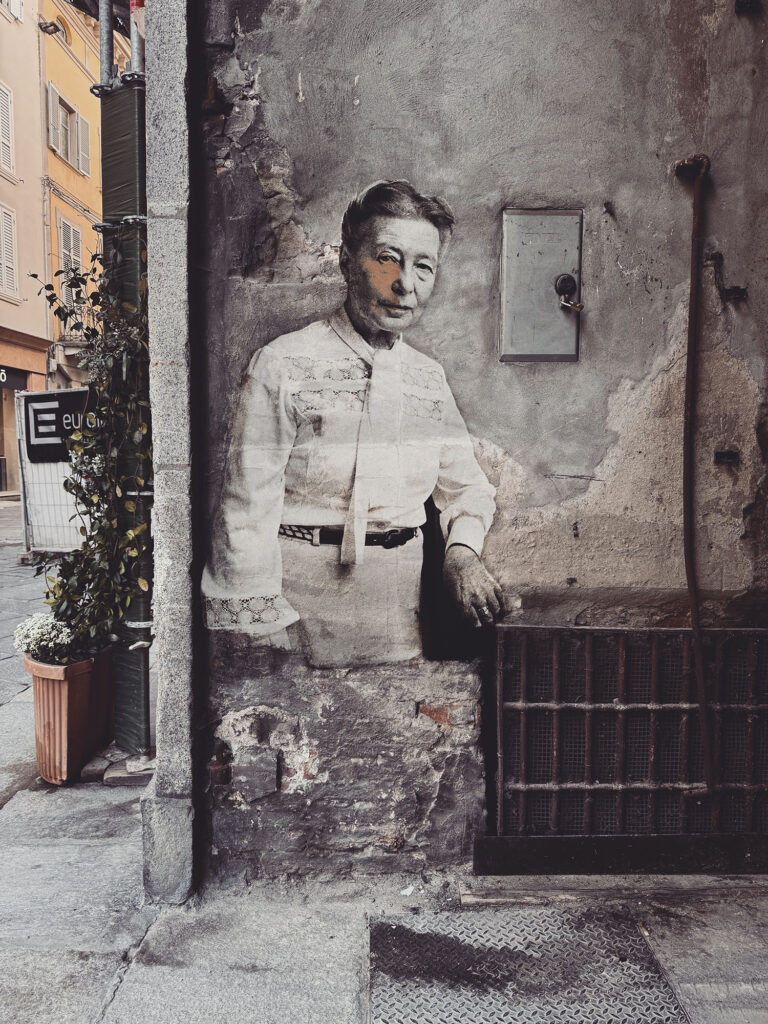
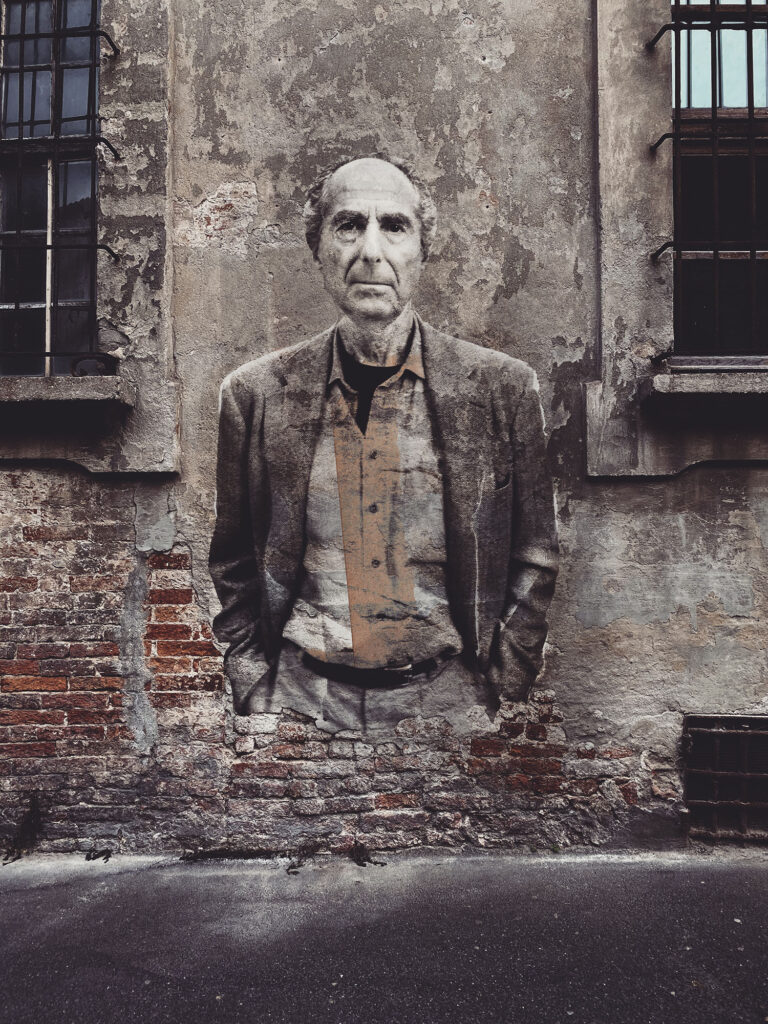
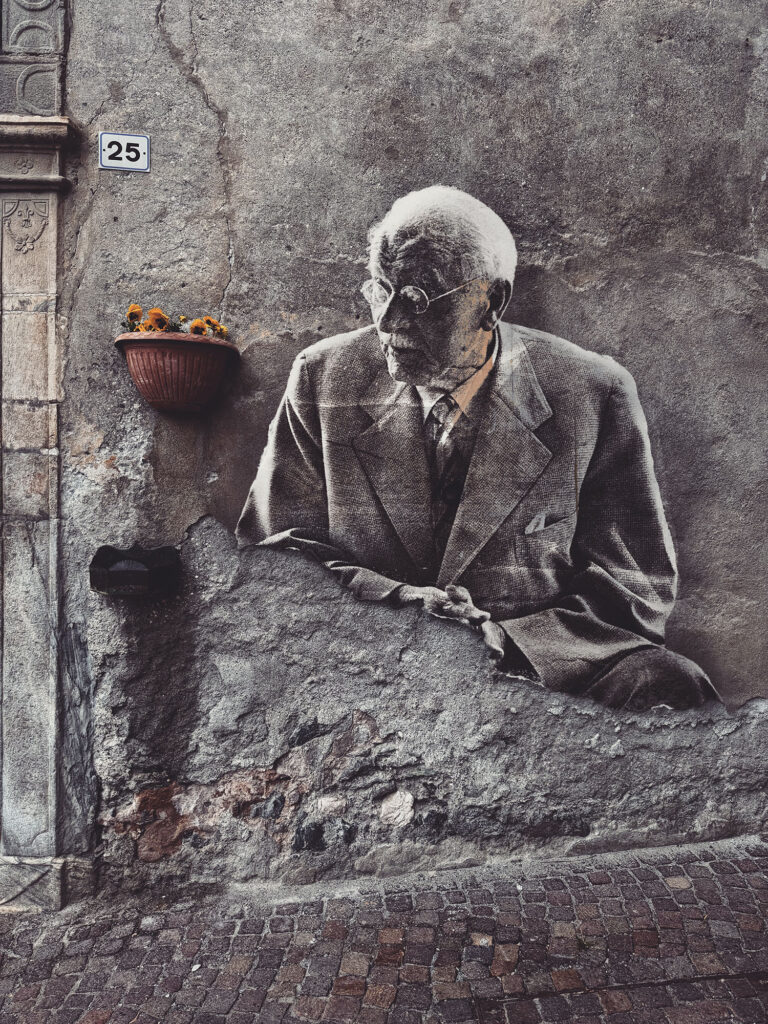
In “…and we hired a bloke to fix the wall”, the wall is not just a surface. It’s the starting point. The process is precise, almost obsessive. Beast first photographs the chosen wall in detail—every crack, stain, fold, scar left by time. That image becomes a texture map. Back in the studio, the texture of the wall is digitally overlaid onto the portrait of a historical figure. The subject absorbs the wall before ever touching it. Only then does Beast return to the location to paste the work back onto the exact same surface. If everything aligns correctly, the result is unsettling: the portrait seems to emerge from within the wall itself. The cracks line up. The folds continue. The image doesn’t sit on the wall—it breathes through it. The effect is deliberate. These figures are not placed there as portraits or monuments. They feel more like presences.
Traces. Something that never really left.
Abandoned places
Beast installs these works almost exclusively in abandoned historical centers—places emptied by time, economics, migration, neglect. No foot traffic. No advertising. No curatorial panels explaining what you’re supposed to think. And that’s the point. Abandoned places don’t compete for attention. They don’t sell anything. They don’t perform. When a figure like Jung or de Beauvoir appears there, the encounter feels intimate, almost private. You’re not consuming an artwork. You’re stumbling into it. The wall already carries history. The artwork doesn’t overwrite it. It collaborates with it.
Who appears on the walls?
So far, the series has featured around a dozen historical figures: Philip Roth, John Updike, Carl Gustav Jung, Louis-Ferdinand Céline, Jackson Pollock, Francis Bacon, Jasper Johns, Ernest Hemingway, Simone de Beauvoir, Eduardo De Filippo, among others. There’s no single category tying them together. Writers, painters, thinkers, artists. What they share is not fame, but endurance. Their ideas outlived their bodies. Their work still generates friction. Placed on decaying walls, the contrast becomes obvious: matter collapses, thought doesn’t.
A series rooted in history—and distrust
At the core of “…and we hired a bloke to fix the wall” sits a sentence by historian Howard Zinn:
“If you don’t know history it is as if you were born yesterday. And if you were born yesterday, anybody up there in a position of power can tell you anything, and you have no way of checking up on it.”
That quote isn’t just a reference. It’s the engine of the whole project. Beast’s work has always been suspicious of power, but here the suspicion is directed at something more subtle: historical amnesia. The idea that forgetting is neutral. That moving on is harmless. That repairing the wall means erasing the crack. The title itself—“…and we hired a bloke to fix the wall”—sounds casual, almost throwaway. But it’s loaded with irony. Fixing the wall means making it clean, smooth, forgettable. Beast does the opposite. He highlights the damage and lets history leak through it.
Not monuments, not nostalgia
It’s important to be clear: this series is not nostalgic. These are not celebratory portraits. Beast is not building monuments. Monuments freeze meaning. They reassure. They tell you what to think. These images don’t do that. They feel unstable, temporary, vulnerable. Paper on a ruined wall. Exposed to weather, time, removal. Just like memory itself. The figures hover between presence and disappearance. They’re there, but not fully. You can’t ignore them, but you can’t own them either.
The street as an open conversation
Beast has often described the street as an open-air gallery, but not in the romantic sense. The street doesn’t protect art. It tests it. Anyone can encounter these works. Anyone can misunderstand them. Ignore them. Tear them down. Photograph them. Walk past without noticing. That lack of control is essential. Art in the street doesn’t deliver conclusions. It creates interruptions. A break in the flow. A moment where something doesn’t belong, and that discomfort forces attention.
Seeing instead of fixing
In the end, “…and we hired a bloke to fix the wall” isn’t really about walls. It’s about what we do when something shows signs of age. Do we cover it? Repair it? Erase it? Or do we stop and look? Beast’s answer is clear, even if the work itself remains elusive. The cracks matter. The past matters. And sometimes the most radical gesture is not fixing anything at all—but letting history show through.
Do visit for more arts http://www.beaststreetart.com