Kevin Hayward
Joel Doria’s new 10 track album, “Electronic Pulsations,” explores an eclectic spectrum of sound while presenting a provocative vision of the relationship between humanity, artificial intelligence and electronic innovation.
In an era where technology is rapidly reshaping the way we create, communicate and experience art, musician Joel Doris steps into the conversation with Electronic Pulsations, a new album built around experimentation, musical freedom and futuristic imagination. Released on August 1, the 10 track project is composed, arranged and performed by Doria himself, presenting a body of work in which no two songs are intended to sound quite the same.
Rather than restricting the project to a single genre or recognizable formula, Doria uses Electronic Pulsations as an opportunity to move freely between contrasting musical identities. Across its ten songs, the album explores different moods, styles and arrangements, creating an experience designed to continuously shift its atmosphere.
That diversity is at the heart of the record.
Among the album’s standout moments is track five, “Nice Day,” which introduces a funky, disco influenced flavor. Energetic and rhythmic, the song brings a lighter dimension to the project and reflects Doria’s willingness to revisit familiar musical influences through a contemporary lens.
Later in the album, “The Night Is Good,” appearing as track eight, moves into a distinctly different environment. Modern and nightclub inspired, the song embraces the energy of nightlife and electronic culture. Its atmosphere demonstrates another side of Electronic Pulsations, moving away from the disco character of “Nice Day” and toward a more contemporary, after dark sound.
Track ten, “Turn Underwear,” takes yet another direction. Described as an operatic piece featuring a striking guitar solo, it closes the album with an unexpected combination of theatricality and instrumental expression. The contrast between these tracks offers a glimpse into the wider philosophy behind the record: experimentation takes priority over predictability. The remaining songs continue that idea, with each composition contributing its own character to the album. While its musical variety is central to the project, Electronic Pulsations also communicates its concept visually.
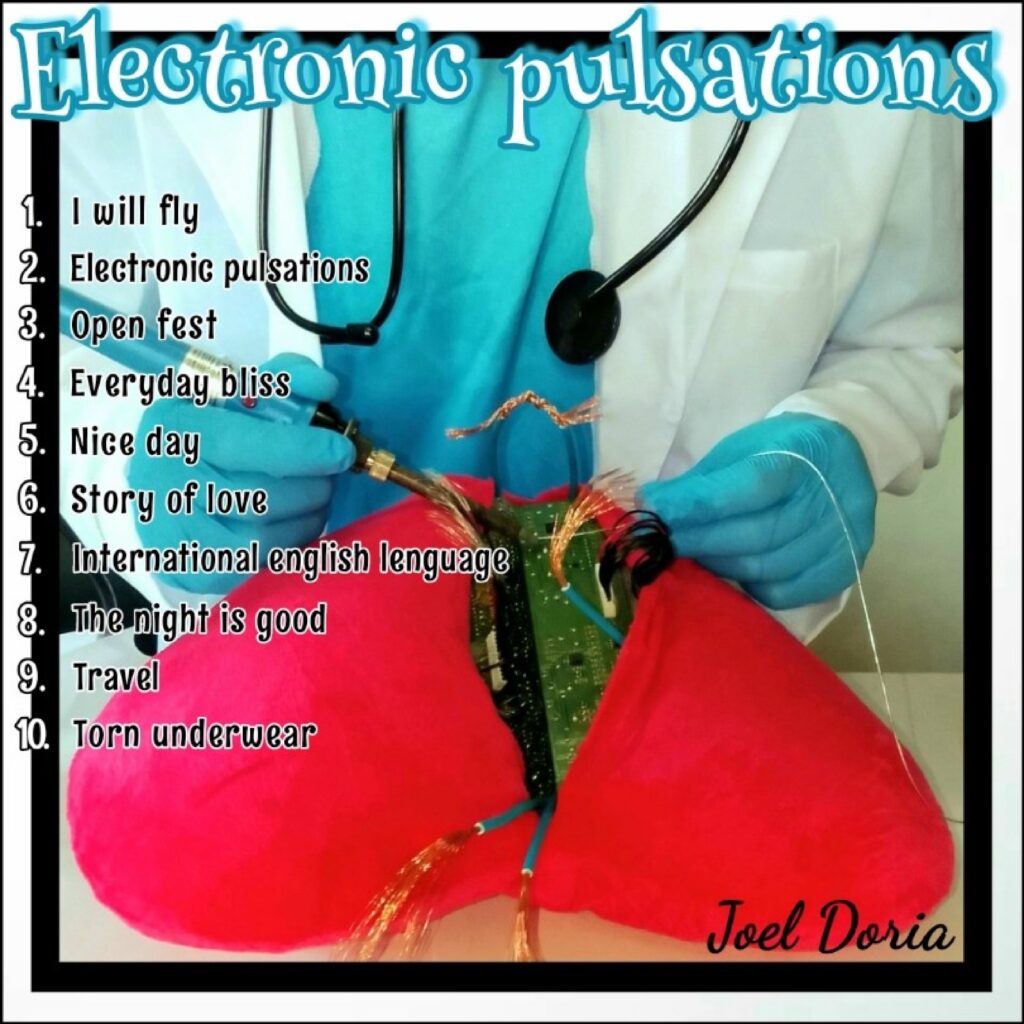
The album artwork depicts Joel Doria as a doctor working on the construction of an electronic, beating heart. It is an image that immediately connects the biological with the technological. Instead of operating on a conventional human heart, the doctor is engaged with something artificial a functioning electronic creation representing a future increasingly shaped by artificial intelligence, machines and technological advancement.

The imagery works simultaneously as futuristic fantasy and social satire.
As artificial intelligence becomes increasingly capable of performing tasks once considered exclusively human, questions surrounding the relationship between people and technology have moved from science fiction into everyday life. Doria’s electronic heart offers a visual interpretation of that transformation. It imagines a world in which electronics do not merely assist the human body but could potentially imitate or replace parts of it.
Yet the message behind the artwork is not simply pessimistic.
There is an intentional contradiction within Electronic Pulsations. The same technological progress capable of making people question humanity’s future can also inspire extraordinary creativity, ingenuity and innovation. Technology can replace certain processes, but it can simultaneously provide artists, musicians and inventors with possibilities that previous generations could scarcely have imagined.
The electronic heart therefore becomes an effective symbol for the entire album.
A heart represents life, emotion and human identity. Electronics represent machines, precision and technological evolution. Combining the two creates an image that sits somewhere between warning and possibility an appropriate visual companion to an album that refuses to remain musically confined.
That philosophy is also reflected in Doria’s hands on approach to the project. By composing, arranging and performing the album himself, he maintains a personal creative thread throughout a collection deliberately built around stylistic differences. While the genres and moods may change from track to track, the artist behind them remains the connecting force. In this sense, the title Electronic Pulsations becomes particularly meaningful. A pulse is traditionally evidence of life, but here that pulse is electronic. It raises a playful yet increasingly relevant question: in a world where machines can create, calculate, communicate and even imitate aspects of human expression, where exactly does the boundary between technology and humanity begin and end?
Doria does not attempt to provide a definitive answer. Instead, he turns the question into music.
With ten distinctly styled tracks, Electronic Pulsations invites listeners to approach the album as a journey rather than a collection built around one genre. From the funky disco energy of “Nice Day” and the modern nightclub atmosphere of “The Night Is Good” to the operatic ambition and guitar work of “Turn Underwear,” the record embraces contrast as part of its identity.
Ultimately, Electronic Pulsations is a project about movement between genres, between ideas and between the human world and the electronic one. As technology continues to evolve at extraordinary speed, Joel Doria’s latest album arrives with an imaginative proposition: perhaps the future will not simply be human or electronic. Perhaps it will be a pulsating combination of both.